
Compression
Twelve episodes, ten and one half hours of video are completed. The hardest thirty seconds are still ahead. Q: how to discover and reveal the essence of decades of work?

On Saturday afternoon I fly back to England for two weeks. The main work is the Guitar Craft Box Set, and then: a mixing workshop at Peter Gabriel’s Real World Studio. Q: how to discover and transmit the essence of decades of work?
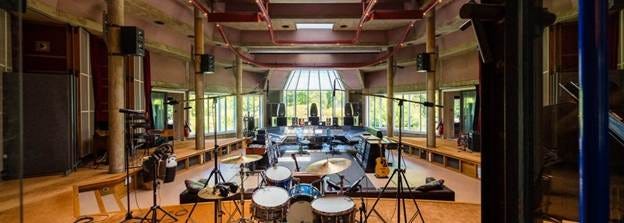
Peter Gabriel’s Real World, Box, Wiltshire. Photo: York Tillyer / Real World
WMD Issue 014. The theme this week is Compression. Two projects, one problem. Take something huge, ten and a half hours of completed film, forty-one years of music, and squeeze it into to something a stranger will be motivated to watch, this is a non-trivial form of human-driven Compression.
The full issue, with the Guitar Craft box set story, the Three B’s, and every trailer cut, is here: steveball.com/circulation/014.html
Ten and a Half Hours → Thirty Seconds
The documentary is twelve episodes. This is already insane in 2026. It is about ten and a half hours of completed film. Only one person has seen all 12 episodes besides the director and myself: TOM guest Oscar Mander and his family! The final 10.5 hour cut was filtered from at least three times as much raw footage. Louise and I have been completing (alleged) ‘last tasks’ to enable a ‘friends and family’ release (target August 24th, which happens to be Patrick Grant’s ‘International Strange Music Day’ And, the next job is sculpting the right trailer from tons of (Michelangelo’s) rock.
Here is the math that keeps me up: ten and a half hours is ~630 minutes. A (short) trailer is 30 seconds. That is a compression ratio of 1,260 to 1, and if you count the raw material we chose from, it climbs past 5,000 to 1.
630 minutes down to 30 seconds. That is 1,260 to 1, before you count the raw footage we cut from.
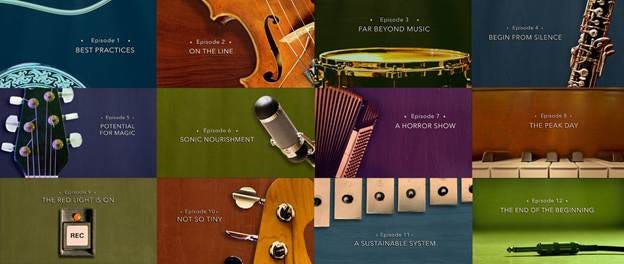
HD Poetry: the twelve episode ‘tiles’ in the TOM documentary series.
The tension I keep hitting is this. I want to make global stars out of these musicians: Paul Richards, Nora Germain, Amy Denio, Nigel Gavin, Sonia Wilson, Julie Slick. Fernando Kabusacki, Luciano Pietrafesa, Shinkuro Matsurra, Horacio Pozzo, Martin de Aguirre, Claudio Lafalce (Big Time Trio), the California Guitar Trio. Not to mention: Oscar Mander, Pat Mastelotto, Beth Fleenor, Rachael Beaver, Nathan Grigg, Tim Root, and the entire TROOT band. So far, seventy-nine musicians have passed through these workshops, and their contributions are so vital and energizing that I want every one of them featured.
The internet in 2026 wants the opposite. One face, one line, three seconds, then we swipe away. The principle of Radical Inclusion and our attention-challenged feeds look like they cancel each other out. I cannot put seventy-nine stars in one trailer and hope that anyone might watch it. Doy-uhhh. Three is hard enough. So, this has been my ‘3am wake up’ nightmare this week. How to ‘solve’ this paradox?
Good news: these only cancel out if I attempt to do it all at once. A single trailer is one moment, and this initial moment is evasive. Here. Poof. Buried in the avalanche. A calendar covers years. So, this is my timeframe: 3 years. Three years to ‘complete’ this work, this release. Ha! We have ~250 songs and thousands of hours of video. Over the next three years I can and will rotate through them, one musician, one piece, one video at a time, a mechanism to give each musician their thirty seconds and then their three minutes. A glimpse. A visit. A deep dive. A podcast interview. And most importantly for you (future listeners): a means to directly experience their work.
That is what turns the redonkulous size of this ten-year investment from a burden into the whole point. The trailer compresses the story down to what a stranger might actually press play on. The release calendar decompresses it, and puts back every person the trailer had to omit. I do not have to argue that these musicians are extraordinary. I can simply release the evidence, over time, until it is obvious.
Credit Where It Is Due | Louise Amandes
None of this exists without the deep and thoughtful storytelling work Louise Amandes has done on the TOM doc series. Anyone who has ever tried to assemble one coherent hour of video, or one coherent story, out of a mountain of raw footage should be in freaking AWE of what she has accomplished with this huge completion: twelve episodes, ten and a half hours, ten years of material, and thousands of decisions no viewer will ever see. If you appreciate any of this, even one song, one anecdote, one story, one moment: please let her know. She earned it, and she should hear it from you.
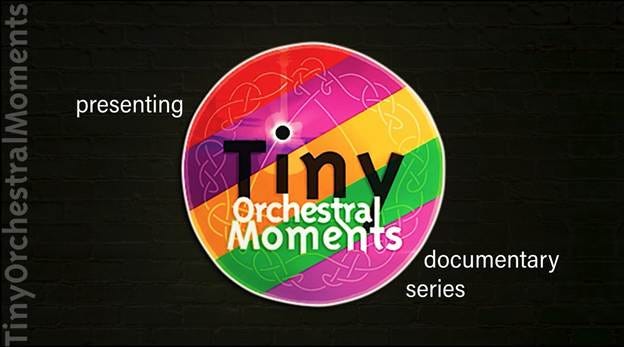
DRAFT Title Screen for the trailer, also another design decision with multiple possible solutions.
The Debate | Names or No Names?
Here is a real question this compression process keeps raising, and I go back and forth on it. Should TOM musicians’ names appear in the trailer? There is a strong case on each side, and the tradeoff says a lot about what a trailer is even for. Here is my view of the trade-offs. And, I want your vote.
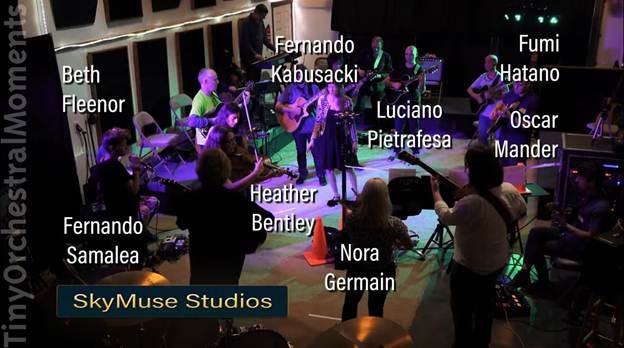
SkyMuse Studios. Beth Fleenor, Fernando Samalea, Fernando Kabusacki, Heather Bentley, Luciano Pietrafesa, Nora Germain, Fumi Hatano, Oscar Mander.
The case for names is 100% for and about the musicians. The most valuable thing this project can give the people who made it is name recognition, and that may be the thing they actually keep from this official release. For now, the trailer and the film will mostly interest the people who are in it, and every one of them who gave something real will want to see their name. It is a form of acknowledgment. A formal handshake of recognition of musical identity. It is an acknowledgment of personal presesnce and the commitment these musicians made to this (risky, long hard) work.
NOTE: I know there is an ‘ego oriented’ interpretation of wanting names on screen, so let me get ahead of that BS. My argument is also about esteem, which is radically different from ego. Esteem is the plain recognition that a person did real work and has earned explicit credit for it, in line and visible. Naming a musician on screen is for them: and it is credit for their work. It is not unnecessary attention for them, or me. We mostly don’t know who built the great cathedrals. But musicians who struggle to keep going, keep practicing, keep writing, keep traveling, keep giving up everything to follow the Music where it goes: the deserve at least this minor, in line credit.
So here are the questions for you. Who is a trailer like this really for? And do the names belong in it? Watch the hundred-second cut with names against the same cut without names, and tell me which one you would rather watch. Idea: reply, and help answer this this for us.
Watch the Options
It is probably ridiculous to keep posting cuts of a trailer that is not done yet. I have no idea if anyone wants to watch me save the same file as trailer_v3_FINAL_actuallyFINAL. Here are a few of the latest iterations: the same core story w multiple lengths, and a one hundred-second cut in two versions: one with musician names, one without. Sharing both so you can see the difference(s) side by side.
Weird Bonus: Meet the Team, 2018 (an historical view of how insane this is)
P.S. | Sadness: One I Missed
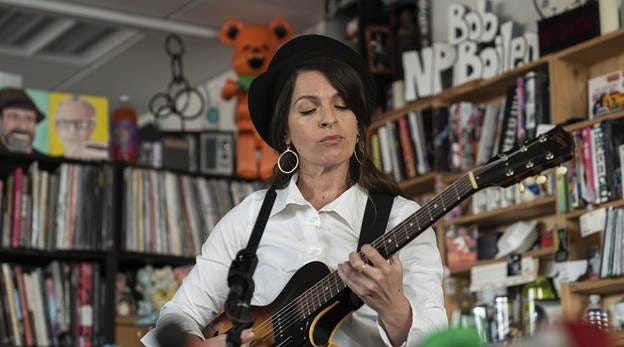
Jesca Hoop. Photo: Tiny Desk.
I missed Jesca Hoop at Ballard Homestead in June because I was in Argentina. She is one of my favorite living songwriters, and I hate that I was on the wrong continent for it. If you do not know her music, go find it. jescahoop.com
Another ask, it’s the same in every issue. If something here moved you, send it to two others who might feel it too. That is how this work keeps going, one pair of hands to the next.
I read every message. Every single one, and I answer when I can.
Read the complete Issue 014, with the Guitar Craft Box Set, the Three B’s, and the full ‘names’ debate: steveball.com/circulation/014.html
Let’s praise all the gods for such music being made today, and all the artists involved as well 🌻👌
NAME THEM.
“….supporting the professional who give their lives to make this possible.” 💖
It doesn’t matter if anyone even reads the names, or recognizes the names, or even if the musicians themselves don’t care you named them.
What does matter is the intent behind naming them: these are the people through which the music is made manifest. Music is people. Individual humans. Irreproducible, utterly unique in the history of the Universe.
We have so many examples of disposable artists and widespread acceptance of this facelessness in for- and non- profit arts:
“Oh, look! Another Spiderman Movie! Come see the movie—we don’t care who the actors are, they're interchangeable and disposable."
“Oh, look! Another Star Wars Movie! Come see the movie—we don’t care who the actors are, they're interchangeable and disposable.”
And my favorite:
“Oh, look! We’re doing The Magic Flute! Come see the opera—it doesn't matter who’s singing so we won’t even bother to tell you who will be squawking out those spectacular high Fs—because whoever plays the Queen of the Night is disposable: we can always find someone else to do it.”
I have such a bee in my bonnet about this!
NAME THEM!